“Every flooring trend article I read gives me one list, as if color moves the same way regardless of what the floor is made of. That doesn’t match what I’m seeing in showrooms. The wood samples and the tile samples seem to be heading in different directions entirely, and I can’t tell whether I’m misreading it or whether the roundups are just oversimplifying.”
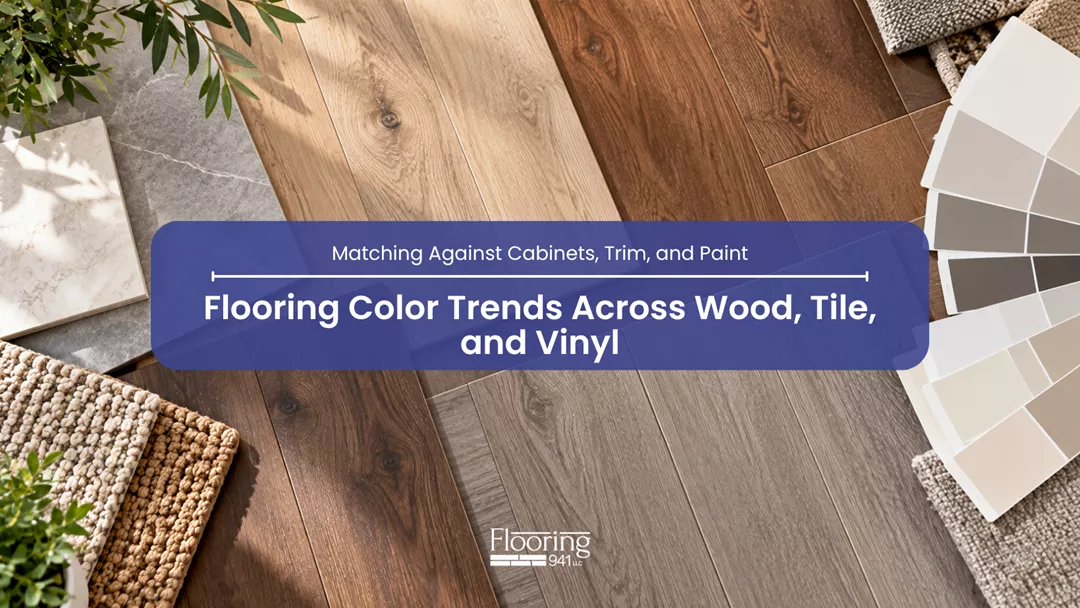
The second one. Flooring color trends diverge meaningfully by material, because each category has its own manufacturing constraints, its own buyer expectations, and its own relationship to what came before it. Wood is swinging back toward warmth after a long gray period. Tile is expanding into earth tones and terracotta that would have looked dated five years ago. Vinyl is chasing realism more than color, with the biggest gains coming from pattern variation rather than new shades. Treating all three as one trend misses what’s genuinely happening in each.
Key Takeaways
- Wood is moving back toward warm and natural tones. The cool gray era that dominated the 2010s is receding, with white oak and honey-toned finishes gaining ground.
- Tile is embracing earth tones and terracotta. Warm clay, sand, and clay-red palettes have returned, alongside continued growth in large-format neutral stone looks.
- Vinyl’s biggest change is realism, not color. Improved printing and embossing mean vinyl is converging on wood and stone appearance rather than developing its own palette.
- Cool gray is declining across all three categories. This is the one direction that holds true regardless of material, though it’s fading fastest in wood.
- Warm neutrals have the strongest staying power. They’ve outlasted multiple trend cycles, which makes them the safer choice if you’re not planning to replace the floor soon.
What’s Happening With Wood Flooring Colors?
Of the three categories, wood is seeing the most pronounced movement in flooring color trends right now, largely as a correction to how thoroughly gray dominated the previous decade.
1. Warm and Natural Tones Are Returning
White oak in its natural or lightly finished state has become the reference point for current wood flooring, replacing the gray-washed and heavily stained looks that preceded it. Honey tones, soft caramels, and finishes that let the wood’s own color show through are all gaining share.
The appeal is partly reactive, since homeowners who installed gray floors in 2015 are now the ones replacing them, and partly practical, since warm tones pair more easily with a wider range of wall colors and furniture over time. The broader movement in light wood flooring trends has been the clearest expression of this shift in Florida homes specifically.
2. Cool Grays Are Fading Fastest Here
Gray wood flooring is the single most identifiable “dated to a specific decade” look currently circulating, and it’s fading faster in wood than in any other material. This doesn’t mean every gray floor looks bad, since well-executed warm grays and greiges have held up considerably better than the stark, blue-leaning versions. The versions aging worst are the ones that leaned furthest from natural wood color.
3. Deep Tones Are Holding, but Narrowly
Rich walnut and espresso finishes haven’t disappeared, though their use has narrowed toward specific contexts rather than general popularity. They now read as a deliberate design statement in traditional or transitional homes rather than a default choice, which is a different position than they held fifteen years ago. The considerations covered in dark wood flooring ideas [article to be published] apply more than ever, since executing a dark floor well now requires more intentional pairing than it used to.
4. Low-Contrast, Subtle Grain Is Preferred
Alongside color, the preference for grain variation has shifted toward subtler, more consistent patterns rather than heavily varied planks. This affects perceived color, since a floor with less visual contrast between planks reads as a single tone rather than a mix, which supports the calmer, more unified look driving current interiors.
What’s Happening With Tile Colors?
Tile has gone in a noticeably different direction, with warmth arriving through earth tones rather than wood tones.
- Terracotta and clay reds have genuinely returned, moving from dated to desirable over roughly five years, particularly in kitchens and outdoor-adjacent spaces
- Sand, taupe, and warm beige have replaced the cool grays that dominated large-format tile, tracking the same warming shift happening in wood
- Large-format neutral stone looks continue to grow, with fewer grout lines contributing to the seamless appearance homeowners increasingly want
- Deep greens and muted blues have found a niche in accent applications, particularly bathrooms and laundry rooms where a bolder choice is lower risk
- High-contrast patterned tile remains strong in small spaces, functioning as a design feature rather than a background surface
- Pure white tile has softened toward warm whites and creams, since stark white reads as clinical against the warmer palettes surrounding it
For Florida homes specifically, the practical case for tile runs alongside the aesthetic one, and the moisture performance detailed in why porcelain tile flooring in Sarasota FL is the smartest pick remains the bigger driver for most buyers here.
What’s Happening With Vinyl and LVP Colors?
Vinyl’s trajectory differs from the other two because its color development is tied to how convincingly it can imitate other materials.
The dominant change is realism rather than palette. Improved printing resolution and embossing technology mean vinyl now reproduces wood grain and stone veining far more convincingly than it did even five years ago, which has shifted the category’s color direction toward whatever wood and tile are doing rather than toward distinct vinyl-specific shades. Warm oak looks, weathered and reclaimed wood appearances, and realistic stone patterns are all growing for this reason.
Multi-tone and varied plank patterns have also gained ground, both because they look more natural and because they hide daily wear better in high-traffic homes. Solid, uniform vinyl colors have correspondingly declined, surviving mainly in commercial and utility applications where appearance matters less than durability.
Which Of These Have Staying Power?
Warm neutrals are the clearest answer. Of the current flooring color trends, they’ve survived the most cycles across all three materials, pair with the widest range of wall colors and furnishings, and don’t carry the strong decade association that cool gray now does. If you expect to keep the floor for a long time or might sell within that window, this is the lower-risk direction.
Terracotta and saturated earth tones are genuinely appealing right now but carry more risk, since they’re closer to the start of their cycle than the middle. Very dark and very light extremes also tend to date faster than mid-range tones in either direction. The broader principles in timeless flooring styles apply to color as much as to material and pattern choices.
Frequently Asked Questions
Is gray flooring completely out of style now?
Not completely, though cool and blue-leaning grays are clearly fading. Warm grays and greiges have aged considerably better and still work in many homes, particularly when paired thoughtfully with surrounding tones.
Should I pick a trend or something timeless?
It depends on how long you plan to keep the floor. For a long-term installation or a home you may sell, warm neutrals carry less risk. For a space you expect to update sooner, following a current trend is a reasonable choice.
Do flooring color trends differ in Florida compared to other regions?
Somewhat. Coastal and light-filled homes here tend to favor lighter, warmer palettes more strongly than regions with less natural light, and the warming shift has been particularly visible in Sarasota area homes.
Can I mix different flooring colors between rooms?
Yes, though transitions need planning. Keeping tones within a related family across connected spaces generally produces a more cohesive result than treating each room as independent.
How long does a typical flooring color trend last?
Major color directions tend to run roughly ten to fifteen years before shifting noticeably, which is why the gray cycle that started in the early 2010s is only now receding in a meaningful way.
Choosing With the Full Material Picture in View
Flooring color trends aren’t one conversation. Wood is warming up, tile is embracing earth tones, and vinyl is chasing realism in whatever direction the materials it imitates are heading. Understanding which category you’re shopping in matters more than tracking a single trend list, and the right choice depends on how long you plan to live with it.
Samples in your own lighting remain the only reliable test, since color behaves differently in a showroom than it does in a Florida home with strong afternoon sun.
Choose the Best Colors for Your Own Space with Flooring 941
Flooring 941 can bring samples across wood, tile, and vinyl to your home so you can compare current colors side by side under your actual lighting.
Call (941) 462-5316 or contact us for a free on-site estimate.